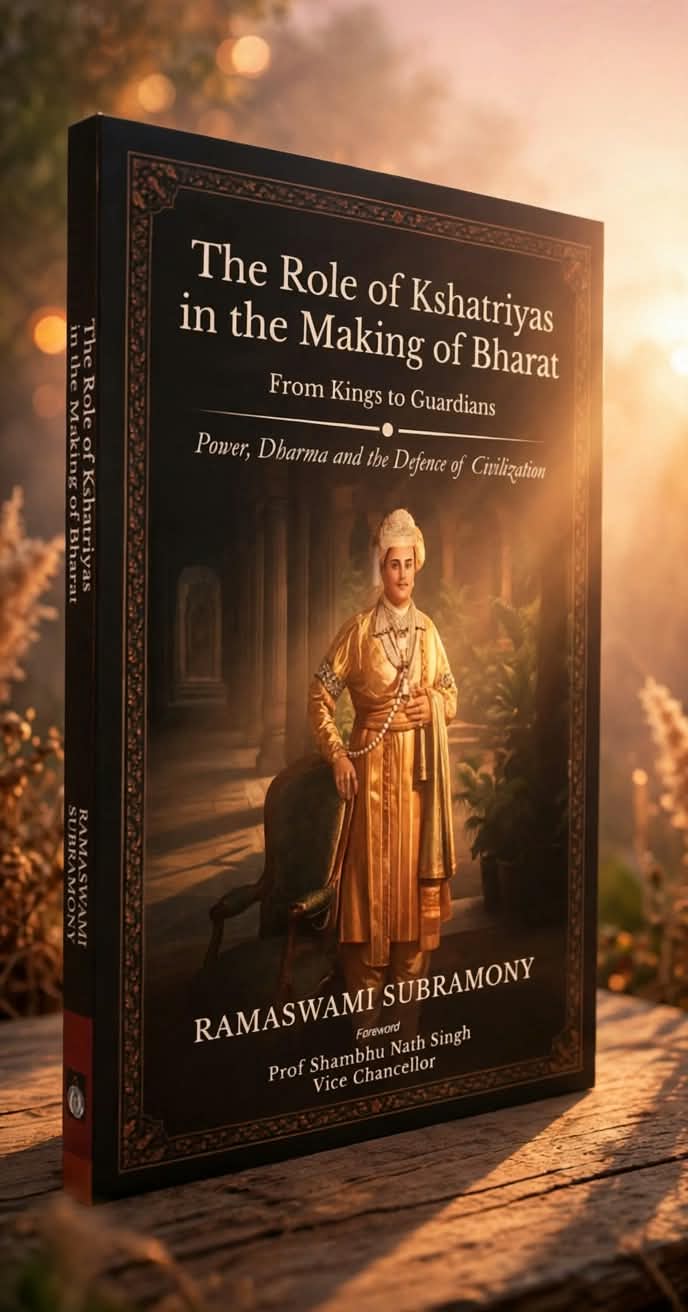
The Role of Kshatriyas in the making of Bharat: From Kings to Guardians presents the first comprehensive study of the Kshatriya tradition as a civilizational force in Indian history. Moving beyond the conventional image of the warrior, this book explores the Kshatriya as the defender of dharma, the guardian of society, the patron of learning, and the architect of righteous governance.
Drawing upon the Vedas, the Ramayana, the Mahabharata, the Dharmashastras, the Arthashastra, the Tirukkural, and the writings of Sri Aurobindo, the book traces the evolution of the Kshatriya ideal from the Vedic age to the present. It examines the lives and achievements of Rama, Krishna, the Pandavas, Chhatrapati Shivaji Maharaj, the great dynasties of the Cholas, Cheras, Pandyas, Pallavas, Kakatiyas, and the princely rulers of Travancore, Cochin, Mysore, and Jaipur. It also reflects on the enduring relevance of the Kshatriya ethos in contemporary public life through the ideals of leadership, courage, service, and national responsibility. Combining historical research with philosophical insight, this work argues that Kshatriyahood is not merely a matter of birth but a timeless ethical ideal rooted in courage, self-sacrifice, justice, and the protection of civilization. Throughout India’s long history, Kshatriyas have stood as guardians of cultural continuity, preserving the nation’s spiritual, intellectual, and political heritage through periods of prosperity and adversity.
Scholarly yet accessible, The Role of Kshatriyas in the making of Bharat offers a fresh perspective on one of the foundational pillars of Bharatiya civilization. It is an essential work for students, researchers, and all readers interested in Indian history, political thought and the enduring ideals that have shaped the civilization of Bharat.
1.	Introduction—The Idea of the Kshatriya in Bharatiya Civilization
2.	Origins in the Vedic Age – Kingship and Cosmic Order
3.	Rajadharma –The Moral Responsibilities of the King
4.	The Kshatriya Ideal in the Epics
5.	The Pandavas and Kshatriya Dharma – Trial, Suffering, and Righteous Action
6.	The Pandyas and Kshatriya Dharma – Justice, Sacral Kingship, and Tamil Polity
7.	Statecraft and Governance – Insights from the Arthashastra
8.	Kshatriyas in the Age of Empire – From Chandragupta to Samudragupta
9.	The Kshatriya and Vedic Dharma
10.	Kshatriyas and the Patronage of the Vedas, Vedic Dharna, and Vedic Brahmins
11.	Kshatriyas under Islamic Rule—Resistance, Adaption, and the Defence of Dharma
12.	Women as Kshatriyas—Queens, Warriors, and Guardians of Dharma
13.	Kshatriyas and the Defence of Bharat – From Regional Powers to Early Modern Resistance
14.	Kshatriyas and the Making of Modern India – From Warrior Lineages to National Leadership
15.	Southern Kshatriyas – Cholas, Cheras, Pandyas, Pallavas, Nayakas, and Kakatiyas
16.	The Maharajas in Modern India – The Case of Travancore
17.	The Maharajas of Cochin – Dharma, Diplomacy, and Cultural Stewardship
18.	The Maharajas of Mysore – Enlightened Kingship and the Model State
19.	Northern Kshatriya States in the Modern Period – Kashmir, Jaipur, and the Rajput Polities
20.	The Kshatriya Spirit Reinterpreted – Swami Vivekananda and Sri Aurobindo
21.	The Ideals of Kshatriyahood – Dharma, Power, and Civilizational Responsibility
22.	The Legacy of the Kshatriyas – Continuity, Memory, and the Future of Dharma
23.	The Sastras on Kshatriya Dharma – Textual Foundations of Kingship and Duty
24.	The Tirukkural and Kshatriya Dharma – The Tamil Vision of Kingship
25.	Kshatriyas and Brahmins – The Balance of Power and Knowledge
26.	Kshatriyas as Protectors of Brahmins and the Vedas
27.	The Contributions of Kshatriyas after independence – From Princes to Public Life
28.	Sri Aurobindo on Kshatriya Dharma – Soul-Force, Courage, and the Union of Power and Knowledge
29.	Kshatriya Ethos in Contemporary India – Lineage, Leadership, and Public Responsibility
Conclusion
Works Cited
Index