Agronomy deals with all aspects of soil, water and crop management to increase the productivity in space and time and has made it possible to generate appropriate technologies for varied agro-climatic situations. It is, therefore, essential that students of agriculture have a good grasp of the subject. Textbooks on basic and applied aspects of agronomy as per the new syllabus recommended by 4th Dean’s Committee of ICAR lacking. Agronomy is the science and technology of producing and using plants for food, fuel, feed, fibre and reclamation. Agronomy encompasses work in the areas of plant genetics, plant physiology, meteorology, and soil science. Agronomy is the application of a combination of sciences like biology, chemistry, economics, ecology, earth science, and genetics. Agronomists today are involved with many issues including producing food, creating healthier food, managing environmental impact of agriculture, and creating energy from plants. Agronomists often specialize in areas such as crop rotation, irrigation and drainage, plant breeding, plant physiology, soil classification, soil fertility, weed control, insect and pest control. This book will be of immense use in imparting knowledge on the basic principles of agronomy and applied aspects of farming systems for students, teachers, scientists, extension workers and professionals engaged in agricultural development.
Contents:
Introduction
Agriculture and Dryland Agronomy
Cropping System
Irrigation Management Technology
Weather Analysis and Agricultural Meteorology
Tillage and Plant Production
Soil Management Techniques
Crop Nutrition and Fertilizer Management
Geographical Water Resource Management
| Title |
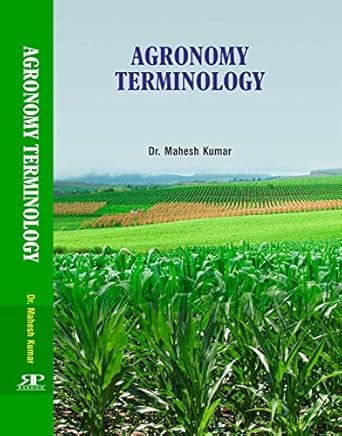
Agronomy Terminology
|
| ISBN-13 |
—
|
| ISBN-10 |
—
|
| Publisher / Imprint |
Random Publisher
|
| Binding |
Paperback
|
| Edition |
1st Edition
|
| Publication Date |
2026
|
| Number of Pages |
—
|
Table of contents is being compiled for this publication.